
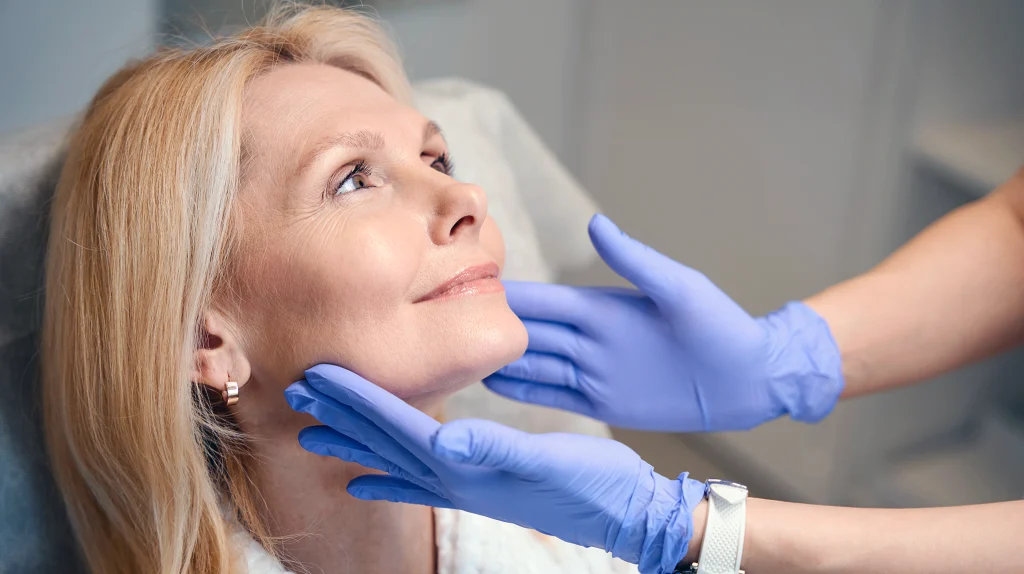
In Part 1 of our Deep Plane Facelift Q&A series, Professor Ilankovan explained how the procedure differs from a traditional facelift, the signs of facial ageing it can address and who may be suitable for surgery.
In Part 2, we look more closely at what happens on the day of surgery and during the weeks that follow. Professor Ilankovan discusses anaesthetic, incisions and operating time, together with what to expect during recovery.
How is a Deep Plane Facelift performed?
After raising the skin flap, the mobile SMAS tissues are mobilised and suspended to the deep temporal fascia or mastoid fascia (strong layers of tissue around the temple and behind the ear that are used to support the repositioned facial tissues). The skin is then redraped and closed in the same way as a standard facelift.
What type of anaesthetic is used?
At Wentworth Clinic, we carry out Deep Plane Facelift surgery under local anaesthetic with oral sedation, and general anaesthetic is also an option where appropriate.
The type of anaesthetic best suited to you will be discussed during your consultation.
How long does the surgery take?
A Deep Plane Facelift typically takes around four to five hours to perform.
The exact operating time will depend on the surgery required and whether other procedures are being carried out at the same time.
Where are the incisions made?
The incisions are the same as those used for a standard facelift. They usually start above the ears within the hairline, follow the natural contours of the ear and continue behind the ear into the scalp, where they are hidden by the hair.
Depending on the surgery required, either a short-scar or full facelift incision may be used.
How should I prepare for surgery?
We will provide you with the necessary information and instructions during your consultation.
Your medical history, medications and any relevant lifestyle factors will also be discussed beforehand.
What can I expect during the first few days after surgery?
During the first few days, you should take your medication as prescribed and sleep with your head elevated for two to three days. The wounds should also be cleaned daily as instructed.
Some swelling, bruising and discomfort are to be expected, although the amount varies from patient to patient.
When can I drive, return to work and exercise?
Driving is usually possible after two to three days, although you should only drive when you feel comfortable and are able to do so safely.
Most patients can return to work after two to three weeks. Excessive exercise should be avoided for around two to three weeks while the initial healing takes place.
How long before I look and feel more like myself?
Most patients begin to look and feel more like themselves within around three weeks.
Some swelling may still be present at this stage, but the appearance will gradually settle over the coming weeks.
What follow-up care will I receive?
Patients are usually seen for weekly follow-up appointments during the first month after surgery. This allows us to monitor healing and address any concerns during the early recovery period.
What’s next? Deep Plane Facelift Q&A Part 3
In Part 3, Professor Ilankovan will cover the results of Deep Plane Facelift surgery, how long they generally last and what can help maintain them. We will also look at the risks and potential complications associated with surgery, as well as when revision may be necessary.
If you’d like to discuss facelift surgery and what the procedure and recovery may involve for you, you can arrange a consultation with Professor Ilankovan at Wentworth Clinic.

Leave a Reply